Game Guide Collection
Memory Match Training: Methods to Remember Card Positions
2026-04-25
%22%3E%0A%20%20%20%20%20%20%3Cpath%20d%3D%22M%2048%200%20L%200%200%200%2048%22%20fill%3D%22none%22%20stroke%3D%22rgba(255%2C255%2C255%2C0.16)%22%20stroke-width%3D%221%22%2F%3E%0A%20%20%20%20%3C%2Fpattern%3E%0A%20%20%20%20%3Cfilter%20id%3D%22softShadow%22%3E%0A%20%20%20%20%20%20%3CfeDropShadow%20dx%3D%220%22%20dy%3D%2218%22%20stdDeviation%3D%2218%22%20flood-color%3D%22rgba(0%2C0%2C0%2C0.35)%22%2F%3E%0A%20%20%20%20%3C%2Ffilter%3E%0A%20%20%3C%2Fdefs%3E%0A%20%20%3Crect%20width%3D%221200%22%20height%3D%22675%22%20fill%3D%22url(%23bg)%22%2F%3E%0A%20%20%3Crect%20width%3D%221200%22%20height%3D%22675%22%20fill%3D%22url(%23grid)%22%20opacity%3D%220.48%22%2F%3E%0A%20%20%3Ccircle%20cx%3D%22187%22%20cy%3D%22242%22%20r%3D%22190%22%20fill%3D%22rgba(255%2C255%2C255%2C0.13)%22%2F%3E%0A%20%20%3Ccircle%20cx%3D%22907%22%20cy%3D%22391%22%20r%3D%22260%22%20fill%3D%22rgba(255%2C255%2C255%2C0.11)%22%2F%3E%0A%20%20%3Cpath%20d%3D%22M%2047%20560%20C%20250%20430%2C%20450%20650%2C%20700%20520%20S%201010%20420%2C%201240%20540%20L%201240%20720%20L%200%20720%20Z%22%20fill%3D%22rgba(15%2C23%2C42%2C0.34)%22%2F%3E%0A%20%20%3Cg%20filter%3D%22url(%23softShadow)%22%3E%0A%20%20%20%20%3Crect%20x%3D%2282%22%20y%3D%2286%22%20width%3D%221036%22%20height%3D%22503%22%20rx%3D%2234%22%20fill%3D%22rgba(255%2C255%2C255%2C0.14)%22%20stroke%3D%22rgba(255%2C255%2C255%2C0.36)%22%2F%3E%0A%20%20%20%20%3Ctext%20x%3D%22130%22%20y%3D%22178%22%20fill%3D%22%23fff7ed%22%20font-family%3D%22Inter%2C%20Arial%2C%20sans-serif%22%20font-size%3D%2234%22%20font-weight%3D%22700%22%20letter-spacing%3D%224%22%3EGAME%20GUIDE%20COLLECTION%3C%2Ftext%3E%0A%20%20%20%20%3Ctext%20fill%3D%22%23fff7ed%22%20font-family%3D%22Inter%2C%20Arial%2C%20sans-serif%22%20font-size%3D%2256%22%20font-weight%3D%22800%22%3E%3Ctspan%20x%3D%22130%22%20y%3D%22268.64%22%3EMemory%20Match%20Training%3A%20Methods%3C%2Ftspan%3E%3Ctspan%20x%3D%22130%22%20y%3D%22331.36%22%3Eto%20Remember%20Card%20Positions%3C%2Ftspan%3E%3C%2Ftext%3E%0A%20%20%20%20%3Ctext%20x%3D%22130%22%20y%3D%22430%22%20fill%3D%22%23fff7ed%22%20opacity%3D%220.86%22%20font-family%3D%22Inter%2C%20Arial%2C%20sans-serif%22%20font-size%3D%2230%22%20font-weight%3D%22500%22%3EGameHub%20browser%20game%20guide%3C%2Ftext%3E%0A%20%20%20%20%3Cg%20transform%3D%22translate(918%20388)%22%3E%0A%20%20%20%20%20%20%3Crect%20width%3D%22128%22%20height%3D%22128%22%20rx%3D%2228%22%20fill%3D%22rgba(255%2C255%2C255%2C0.2)%22%20stroke%3D%22rgba(255%2C255%2C255%2C0.42)%22%2F%3E%0A%20%20%20%20%20%20%3Ccircle%20cx%3D%2264%22%20cy%3D%2264%22%20r%3D%2235%22%20fill%3D%22none%22%20stroke%3D%22%23fff7ed%22%20stroke-width%3D%2210%22%2F%3E%0A%20%20%20%20%20%20%3Cpath%20d%3D%22M57%2044%20L84%2064%20L57%2084%20Z%22%20fill%3D%22%23fff7ed%22%2F%3E%0A%20%20%20%20%3C%2Fg%3E%0A%20%20%3C%2Fg%3E%0A%3C%2Fsvg%3E)
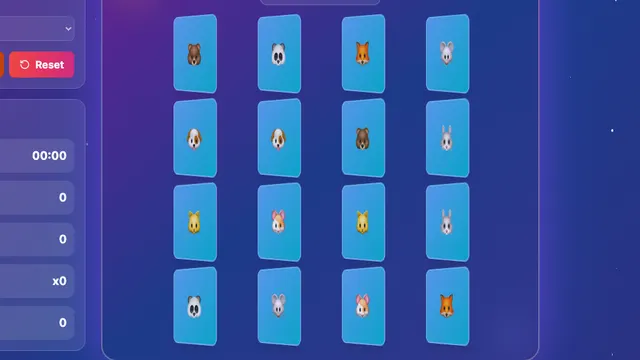
Memory Match, also called card matching or memory flip, has very simple rules: all cards lie face down, you flip two at a time, matching images are removed and non-matching ones are turned back, and the goal is to clear all cards in as few attempts as possible. It seems to test only natural memory, but there is plenty of method to follow, and good strategy lets people with quite ordinary memory play very well.
Before the methods, understand one key point: what Memory Match really tests is not remembering a card, but remembering the link between a card’s position and its image. So all the techniques are essentially ways to help you build that position-to-image link more firmly and more systematically.
The first method is zone-based memory. Human short-term memory has limited capacity, and trying to memorize the whole board at once is bound to lose track. The right approach is to mentally divide the card grid into a few small zones, such as top-left, top-right, bottom-left, and bottom-right, and focus on remembering the cards seen within one zone at a time. Smaller zones mean less information to hold at once, and the brain actually retains it more reliably.
The second method is systematic flipping. In the opening stage, do not flip a card here and a card there at random; reveal cards in a fixed order, such as strictly left to right and top to bottom. The benefit of systematic flipping is that it ensures you gather information evenly across the whole board, avoiding the situation where some positions are flipped repeatedly while others are never seen.
Combining zone-based memory with systematic flipping works best: while flipping in a fixed order, mentally file each piece of information into its corresponding zone. That way you achieve both comprehensive information gathering and orderly information storage.
The third method is association, the technique that truly sets players apart. Simply repeating to yourself that the second card in the third row is a star is very easy to forget, because it is a string of abstract information. But if you build a picture or short story around it, such as a cat hiding in the corner or two stars separated by a bridge, the memory becomes far stronger. Giving abstract positions and images a sense of picture and story is the shared core of nearly every memory-training school.
There is also a small in-game trick: make use of every failed flip. Even when the two cards you flip do not match, they still give you two new pieces of information. Build the habit of quickly filing the position and image of those two cards into your memory zones before they turn back over; many matches are completed precisely thanks to this incidentally noted information.
Memory Match is also great daily brain practice, and especially good to play with children. We suggest starting with a difficulty that uses fewer cards, mastering the methods above and clearing it consistently, then gradually increasing the card count to raise the challenge. Play a few rounds of our Memory Match each day and you will clearly feel yourself memorizing and recalling positions faster, which is the method at work, not just talent.