Game Guide Collection
Spider Solitaire Guide: From One Suit to Four
2026-03-02
%22%3E%0A%20%20%20%20%20%20%3Cpath%20d%3D%22M%2048%200%20L%200%200%200%2048%22%20fill%3D%22none%22%20stroke%3D%22rgba(255%2C255%2C255%2C0.16)%22%20stroke-width%3D%221%22%2F%3E%0A%20%20%20%20%3C%2Fpattern%3E%0A%20%20%20%20%3Cfilter%20id%3D%22softShadow%22%3E%0A%20%20%20%20%20%20%3CfeDropShadow%20dx%3D%220%22%20dy%3D%2218%22%20stdDeviation%3D%2218%22%20flood-color%3D%22rgba(0%2C0%2C0%2C0.35)%22%2F%3E%0A%20%20%20%20%3C%2Ffilter%3E%0A%20%20%3C%2Fdefs%3E%0A%20%20%3Crect%20width%3D%221200%22%20height%3D%22675%22%20fill%3D%22url(%23bg)%22%2F%3E%0A%20%20%3Crect%20width%3D%221200%22%20height%3D%22675%22%20fill%3D%22url(%23grid)%22%20opacity%3D%220.48%22%2F%3E%0A%20%20%3Ccircle%20cx%3D%22212%22%20cy%3D%2232%22%20r%3D%22190%22%20fill%3D%22rgba(255%2C255%2C255%2C0.13)%22%2F%3E%0A%20%20%3Ccircle%20cx%3D%22992%22%20cy%3D%22-77%22%20r%3D%22260%22%20fill%3D%22rgba(255%2C255%2C255%2C0.11)%22%2F%3E%0A%20%20%3Cpath%20d%3D%22M%2052%20560%20C%20250%20430%2C%20450%20650%2C%20700%20520%20S%201010%20420%2C%201240%20540%20L%201240%20720%20L%200%20720%20Z%22%20fill%3D%22rgba(15%2C23%2C42%2C0.34)%22%2F%3E%0A%20%20%3Cg%20filter%3D%22url(%23softShadow)%22%3E%0A%20%20%20%20%3Crect%20x%3D%2282%22%20y%3D%2286%22%20width%3D%221036%22%20height%3D%22503%22%20rx%3D%2234%22%20fill%3D%22rgba(255%2C255%2C255%2C0.14)%22%20stroke%3D%22rgba(255%2C255%2C255%2C0.36)%22%2F%3E%0A%20%20%20%20%3Ctext%20x%3D%22130%22%20y%3D%22178%22%20fill%3D%22%23f8fafc%22%20font-family%3D%22Inter%2C%20Arial%2C%20sans-serif%22%20font-size%3D%2234%22%20font-weight%3D%22700%22%20letter-spacing%3D%224%22%3EGAME%20GUIDE%20COLLECTION%3C%2Ftext%3E%0A%20%20%20%20%3Ctext%20fill%3D%22%23f8fafc%22%20font-family%3D%22Inter%2C%20Arial%2C%20sans-serif%22%20font-size%3D%2272%22%20font-weight%3D%22800%22%3E%3Ctspan%20x%3D%22130%22%20y%3D%22259.68%22%3ESpider%20Solitaire%20Guide%3A%3C%2Ftspan%3E%3Ctspan%20x%3D%22130%22%20y%3D%22340.32000000000005%22%3EFrom%20One%20Suit%20to%20Four%3C%2Ftspan%3E%3C%2Ftext%3E%0A%20%20%20%20%3Ctext%20x%3D%22130%22%20y%3D%22430%22%20fill%3D%22%23f8fafc%22%20opacity%3D%220.86%22%20font-family%3D%22Inter%2C%20Arial%2C%20sans-serif%22%20font-size%3D%2230%22%20font-weight%3D%22500%22%3EGameHub%20browser%20game%20guide%3C%2Ftext%3E%0A%20%20%20%20%3Cg%20transform%3D%22translate(918%20388)%22%3E%0A%20%20%20%20%20%20%3Crect%20width%3D%22128%22%20height%3D%22128%22%20rx%3D%2228%22%20fill%3D%22rgba(255%2C255%2C255%2C0.2)%22%20stroke%3D%22rgba(255%2C255%2C255%2C0.42)%22%2F%3E%0A%20%20%20%20%20%20%3Ccircle%20cx%3D%2264%22%20cy%3D%2264%22%20r%3D%2235%22%20fill%3D%22none%22%20stroke%3D%22%23f8fafc%22%20stroke-width%3D%2210%22%2F%3E%0A%20%20%20%20%20%20%3Cpath%20d%3D%22M57%2044%20L84%2064%20L57%2084%20Z%22%20fill%3D%22%23f8fafc%22%2F%3E%0A%20%20%20%20%3C%2Fg%3E%0A%20%20%3C%2Fg%3E%0A%3C%2Fsvg%3E)
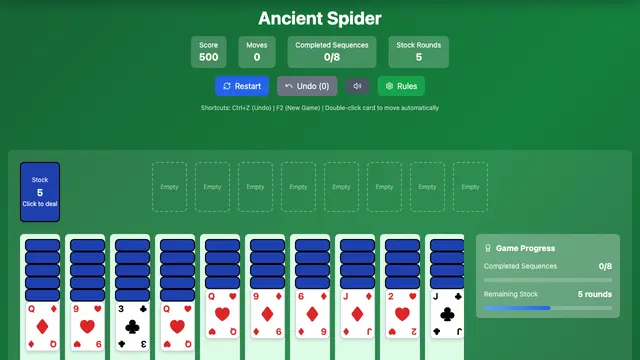
The goal of Spider Solitaire is to build each column into a complete same-suit run from King down to Ace and remove it. The difficulty depends on the number of suits: one suit suits beginners, two suits require more planning, and four suits demand real patience. New players are strongly advised to start with one suit, learn the basic rhythm, and build confidence before moving up, rather than grinding four suits from the start.
The core principle is to prioritize same-suit sequences. Although the rules let you stack different suits in descending order, only consecutive same-suit cards can be moved as a single group. This is the cornerstone of all Spider Solitaire strategy: mixed-suit stacking is only a temporary measure, while a long same-suit run is real progress. Before every stacking move, ask whether it helps assemble a same-suit run or just piles cards together temporarily.
Minimize mixed-suit stacking, because such stacks are very hard to take apart later. Once you place an eight of spades on a nine of hearts, moving that nine of hearts alone again means you must first find another home for the eight of spades. The more mixed-suit stacks you make, the more rigid the board becomes. Ideally, only make a mixed-suit stack when there is a genuine gain, such as revealing a face-down card, and untangle it as soon as you can.
Empty columns are the strongest resource in Spider Solitaire. An empty column can temporarily hold any card and can be used to reorganize a messy run, acting as an all-purpose workspace. So create empty columns deliberately: focus your effort on clearing one column rather than letting all ten crawl forward evenly and slowly. Concentrating your resources works far better than spreading them thin.
Revealing face-down cards should be a priority in every move. The real obstacle in Spider Solitaire is the hidden face-down cards; as long as any remain, the board holds unknowns. So when you face a choice, a move that reveals a new face-down card usually takes priority over a move that merely makes the face-up cards tidier.
Dealing timing is critical. The rules require that no column be empty when you deal, so check before each deal that no empty column is being wasted; if there is one, use it first. A deal adds one card to every column and can easily disrupt your neat sequences, so before dealing, clear up the face-up cards as much as possible and connect everything you can, to reduce the mess a deal creates.
When taking on two and four suits, put reversibility first: keep room to undo and avoid irreversible mixed-suit stacks. The difficulty of more suits is not new techniques but a board that gets messy more easily with less margin for error. So it becomes even more important to strictly follow the three principles: prioritize same suits, prioritize revealing face-down cards, and deliberately create empty columns.
A practical practice tip: drill in the one-suit game until you can clear it consistently and have built all the habits above, then move to two suits, where you will find the approach completely transferable and only needing more care. Four suits is more a test of patience and care than a different way to play. Build solid fundamentals at low difficulty and the higher difficulties follow naturally.