Game Guide Collection
Sudoku Solving Techniques: From Candidates to Advanced Elimination
2026-02-08
%22%3E%0A%20%20%20%20%20%20%3Cpath%20d%3D%22M%2048%200%20L%200%200%200%2048%22%20fill%3D%22none%22%20stroke%3D%22rgba(255%2C255%2C255%2C0.16)%22%20stroke-width%3D%221%22%2F%3E%0A%20%20%20%20%3C%2Fpattern%3E%0A%20%20%20%20%3Cfilter%20id%3D%22softShadow%22%3E%0A%20%20%20%20%20%20%3CfeDropShadow%20dx%3D%220%22%20dy%3D%2218%22%20stdDeviation%3D%2218%22%20flood-color%3D%22rgba(0%2C0%2C0%2C0.35)%22%2F%3E%0A%20%20%20%20%3C%2Ffilter%3E%0A%20%20%3C%2Fdefs%3E%0A%20%20%3Crect%20width%3D%221200%22%20height%3D%22675%22%20fill%3D%22url(%23bg)%22%2F%3E%0A%20%20%3Crect%20width%3D%221200%22%20height%3D%22675%22%20fill%3D%22url(%23grid)%22%20opacity%3D%220.48%22%2F%3E%0A%20%20%3Ccircle%20cx%3D%22191%22%20cy%3D%22204%22%20r%3D%22190%22%20fill%3D%22rgba(255%2C255%2C255%2C0.13)%22%2F%3E%0A%20%20%3Ccircle%20cx%3D%22931%22%20cy%3D%22291%22%20r%3D%22260%22%20fill%3D%22rgba(255%2C255%2C255%2C0.11)%22%2F%3E%0A%20%20%3Cpath%20d%3D%22M%2071%20560%20C%20250%20430%2C%20450%20650%2C%20700%20520%20S%201010%20420%2C%201240%20540%20L%201240%20720%20L%200%20720%20Z%22%20fill%3D%22rgba(15%2C23%2C42%2C0.34)%22%2F%3E%0A%20%20%3Cg%20filter%3D%22url(%23softShadow)%22%3E%0A%20%20%20%20%3Crect%20x%3D%2282%22%20y%3D%2286%22%20width%3D%221036%22%20height%3D%22503%22%20rx%3D%2234%22%20fill%3D%22rgba(255%2C255%2C255%2C0.14)%22%20stroke%3D%22rgba(255%2C255%2C255%2C0.36)%22%2F%3E%0A%20%20%20%20%3Ctext%20x%3D%22130%22%20y%3D%22178%22%20fill%3D%22%23fafafa%22%20font-family%3D%22Inter%2C%20Arial%2C%20sans-serif%22%20font-size%3D%2234%22%20font-weight%3D%22700%22%20letter-spacing%3D%224%22%3EGAME%20GUIDE%20COLLECTION%3C%2Ftext%3E%0A%20%20%20%20%3Ctext%20fill%3D%22%23fafafa%22%20font-family%3D%22Inter%2C%20Arial%2C%20sans-serif%22%20font-size%3D%2248%22%20font-weight%3D%22800%22%3E%3Ctspan%20x%3D%22130%22%20y%3D%22273.12%22%3ESudoku%20Solving%20Techniques%3A%20From%3C%2Ftspan%3E%3Ctspan%20x%3D%22130%22%20y%3D%22326.88%22%3ECandidates%20to%20Advanced%20Elimination%3C%2Ftspan%3E%3C%2Ftext%3E%0A%20%20%20%20%3Ctext%20x%3D%22130%22%20y%3D%22430%22%20fill%3D%22%23fafafa%22%20opacity%3D%220.86%22%20font-family%3D%22Inter%2C%20Arial%2C%20sans-serif%22%20font-size%3D%2230%22%20font-weight%3D%22500%22%3EGameHub%20browser%20game%20guide%3C%2Ftext%3E%0A%20%20%20%20%3Cg%20transform%3D%22translate(918%20388)%22%3E%0A%20%20%20%20%20%20%3Crect%20width%3D%22128%22%20height%3D%22128%22%20rx%3D%2228%22%20fill%3D%22rgba(255%2C255%2C255%2C0.2)%22%20stroke%3D%22rgba(255%2C255%2C255%2C0.42)%22%2F%3E%0A%20%20%20%20%20%20%3Ccircle%20cx%3D%2264%22%20cy%3D%2264%22%20r%3D%2235%22%20fill%3D%22none%22%20stroke%3D%22%23fafafa%22%20stroke-width%3D%2210%22%2F%3E%0A%20%20%20%20%20%20%3Cpath%20d%3D%22M57%2044%20L84%2064%20L57%2084%20Z%22%20fill%3D%22%23fafafa%22%2F%3E%0A%20%20%20%20%3C%2Fg%3E%0A%20%20%3C%2Fg%3E%0A%3C%2Fsvg%3E)
Sudoku is a game of pure logic. Any standard puzzle has exactly one solution and never requires guessing. When beginners get stuck, the problem is usually not difficulty but the lack of an order; they stare at one cell over and over while a much easier breakthrough sits elsewhere. Building a fixed checking routine is far more effective than fixating on a single cell.
Before putting pen to paper, understand the single rule of Sudoku: in every row, every column, and every 3x3 box, the digits 1 through 9 each appear exactly once. All solving techniques are simply different consequences of this one rule. Once you grasp this, you stop guessing and start deducing.
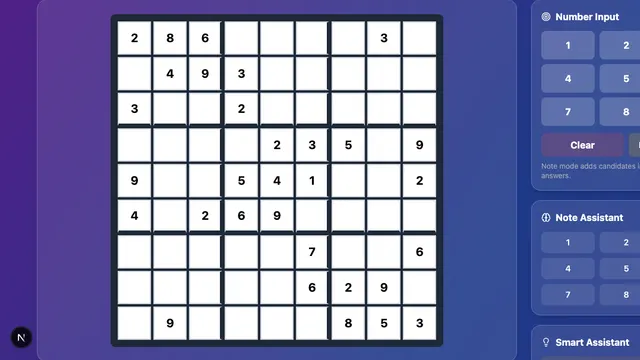
The first step is to scan for naked singles, also called the last-remaining-cell method. Look at each row, column, and box; if a number has only one possible spot left, place it directly. Done thoroughly, this step alone solves much of an easy puzzle. It needs no notation, just patient digit-by-digit scanning. Pick the digit 7, see where it can still go in each box, and you can often spot it at a glance.
When scanning stops producing progress, start marking candidates by writing every still-possible number into each empty cell. This step is a bit tedious, but it is the prerequisite for intermediate and advanced techniques. With candidates in place, the logical structure of the grid is fully exposed, and every later technique builds on it.
With candidates marked, you can use the naked single rule (a cell with only one candidate is filled immediately) and the hidden single rule (if a number appears as a candidate in only one cell of a row, column, or box, place it there even if that cell has other candidates). Hidden singles are what beginners miss most: you see a cell marked 3, 5, 8 and assume it is undecided, but if that cell is the only one in its box whose candidates include 5, then it must be 5.
The next level is naked pairs and the pointing technique. If two cells in a row both have exactly the same two candidates (say only 4 and 9), those two digits must occupy those two cells, so you can delete 4 and 9 from the candidates of other cells in that row. The pointing technique is: if a number, within one box, has all of its candidate positions on the same row or column, you can remove that number from the candidates of other boxes along that row or column.
Most of these advanced techniques do not place numbers directly; they keep trimming candidates. Their job is to tighten the position until a simple technique works again. So the correct rhythm for solving Sudoku is cyclical: after each technique advances the grid, return to the first step and scan again, because a newly placed number or a newly removed candidate may bring naked and hidden singles back into play.
Build the habit of this easy-to-hard, repeatedly-rescanning loop and you will find that the vast majority of medium puzzles need no guessing at all. If a puzzle truly gets stuck, do not resort to guessing; first check whether you marked the candidates wrong, then patiently look for pairs and pointing. The joy of Sudoku is exactly this: with the right method, the answer can always be squeezed out one step at a time.