
Go
An ancient Chinese territory control strategy board game
Strategy4.7
Take turns drawing lines between dots. Close a box to claim it and move again. Most boxes wins.
Draw one line per turn. Finish a box's fourth side to claim it and go again. Avoid drawing the third side of a box.
Space or Enter to start
An ancient Chinese territory control strategy board game
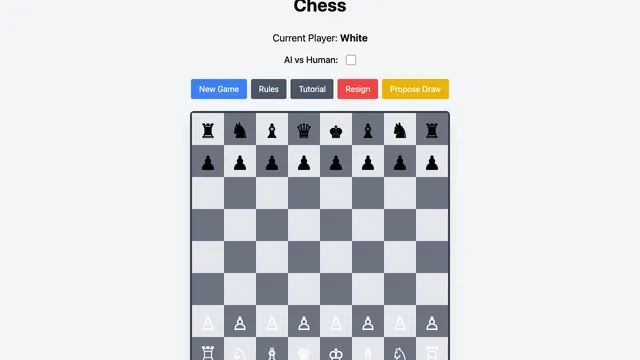
Classic two-player chess with castling, en passant, promotion, and a computer opponent.

X and O on 3×3, 5×5, or 7×7 boards, against the computer or a friend.

Drop discs and line up four in a row before your opponent. Play a friend or a strong CPU
Dots and Boxes is the pen-and-paper game from the back of every school notebook. Two players take turns drawing lines between neighbouring dots on a 5×5 grid of boxes. Draw the fourth side of a box and it's yours, and you move again. When every line is drawn, the player with more boxes wins.
Click or tap near the gap between two dots to draw a line. The nearest open line is highlighted as you move the pointer, and the most recent line is outlined in yellow.
Dots and Boxes was first described by French mathematician Édouard Lucas in 1889 as 'la pipopipette'. It looks childish, but the endgame is deep enough that mathematician Elwyn Berlekamp wrote a whole book on its strategy.
Yes. Completing a box earns it and you must draw another line straight away.
No. The board has 25 boxes, an odd number, so one player always has more.
It always takes free boxes, avoids giving away boxes while it can, and in the endgame sacrifices the shortest chain.